
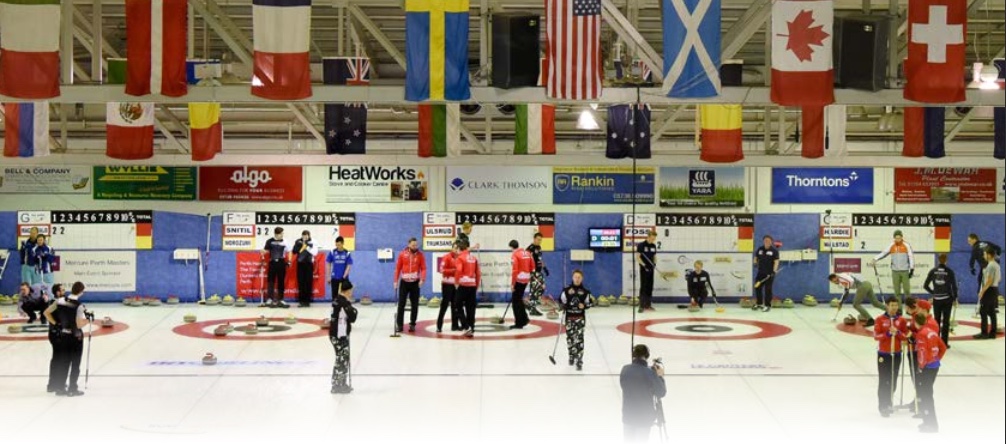
In January this year I got to spend 3 days working with BBC ALBA as a runner as they broadcast the Masters Curling from the Mercure Centre in Perth. For me personally it was a fantastic few days where I learned a lot and my thanks go out to the people who helped get me the opportunity (they know who they are). The production team who allowed me to come along and work with them were also extremely open and giving with their time and advice. Over the three days I got to see how a broadcasting team works together to ensure that the flowing product we all see on TV is produced, talk to and learn from some fantastic people who are excellent at their trade, hear about their experiences of the industry and listen to their advice, make some contacts within the BBC for potential future work experience or jobs, watch some of the world’s very best curlers at their craft and learn what the ancient sport of curling is all about.
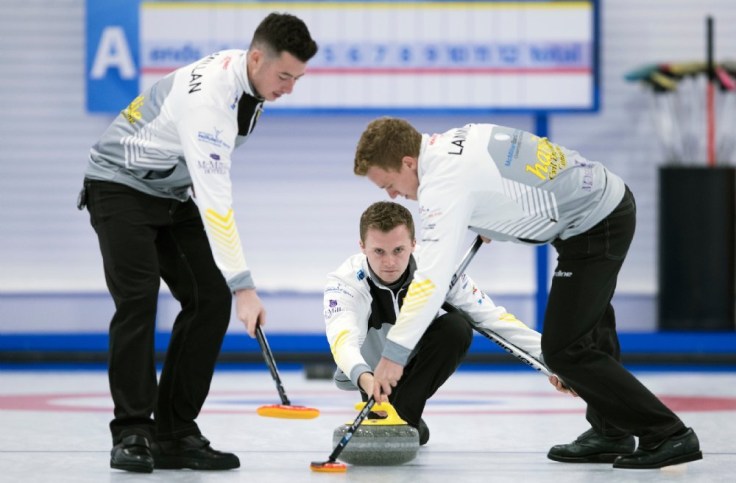
One of the oldest sports in the world, curling originated in Scotland sometime in the 16th century. In fact, the oldest discovered curling stones came from Perth, so the Masters tournament being hosted there was like the sport was going back to it’s roots.
Now, perhaps you are wondering,
‘Why I’m talking about curling within my Ultimate Frisbee blog?’
The reason I am writing this piece is down to a couple of observations that I made during my three days rink-side of the curling. The qualities of curling provide an excellent opportunity to talk about one of the fundamental building blocks of playing Ultimate, the ‘Spirit of the Game’. Ultimate and Curling are obviously very different sports but both have similar aspects to them. Ultimate is fast, you need pace, power, quick-thinking and concentration to succeed within it and is extremely entertaining to watch. Curling is like chess on ice. Different but equally entertaining for a different audience. Players always need to be thinking 3 steps ahead; the whole team need to be working together 100% of the time in total sync with each other; the margins between victory and failure are so fine and the level of technique and core strength required to play are huge. However, one thing stood out in particular which links the two sports together and that is the ‘Spirit of the Game’.
To explain ‘Spirit’ In Ultimate, the responsibility of refereeing matches is placed onto the players themselves and there is an expectation of sportsmanship, of camaraderie and fair play. From the WFDF (World FLying Disc Federation) the definition outlines Spirit of the Game pretty clearly:
“All players are responsible for administering and adhering to the rules. Ultimate relies upon a Spirit of the Game that places the responsibility for fair play on every player. It is trusted that no player will intentionally break the rules; thus there are no harsh penalties for breaches, but rather a method for resuming play in a manner which simulates what would most likely have occurred had there been no breach.
Highly competitive play is encouraged, but should never sacrifice the mutual respect between players, adherence to the agreed-upon rules of the game, or the basic joy of play.”
Referees are not used until you reach the very top level of the sport and even then the players are required to maintain the attitude and behaviour expected of players playing at lower levels. Until that top level, all foul calls are discussed (if needed) between opposing captains. Competitiveness and channelling aggression positively is always demanded of Ultimate players but it should never boil over into becoming disrespect for fellow players and in my experience it never does. This level of respect is something that is also clearly apparent if you watch top curlers play for any length of time as I did in Perth. Throughout the tournament, there was never an incident of passions boiling over in a negative way. Of course the inner aggression and desire to win is sometimes seen on the surface as players yell vital instructions to each other with every throw, but like Ultimate there is never a moment when that aggression is directed at the opposition.
It is impossible to imagine this working in a sport like football but maybe there are reasons why it works for Ultimate and for Curling. Perhaps the relative lack of popularity for Ultimate and Curling as sports compared to the giants of football and rugby helps all players to maintain this ability to respect each other and discuss fouls in a sportsmanlike manner. Perhaps a level of togetherness always remains between opposing players of Ultimate and Curling as they feel they are part of a very select group who must support and encourage each other to keep enjoying the sport they both clearly love. Within players of both sports, maybe there is an inner gratitude and joy that there are lots of other people who share the same passion as they do? In same way that finding out your friend loves the same obscure band as you, Curlers and Ultimate players can both look at the opposition and think, ‘Here are some people who love this sport as much as I do. Isn’t that fantastic?!’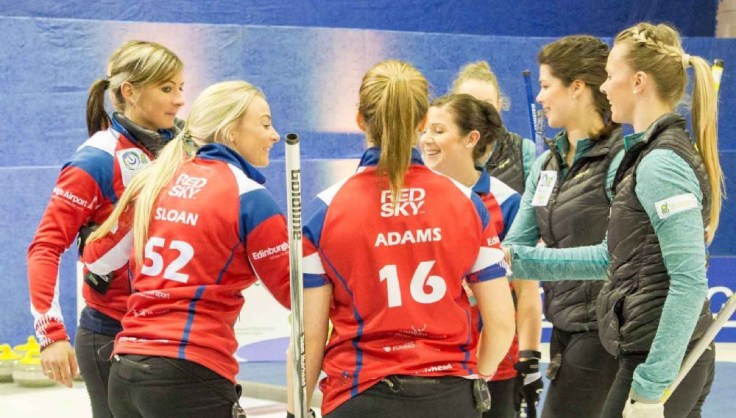
The relative lack of popularity in Ultimate and Curling may be part of the good behaviour and sporting attitudes players display and this contrasts so sharply with sports like football. Some top footballers clearly feel they can dive and do whatever they can to win including using gamesmanship and abuse match officials. This could be because they know that there will always be an abundance of young players wanting to play football. They don’t need to set an example to encourage young players to pick up their sport because it is so concretely popular and the attraction of money and fame if they make it to the top is a huge draw. Conversely, in Curling and Ultimate, players must do everything they can to engage the next generation with their sport. There is no real money to be made in either sport, the level of fame doesn’t compare to football and the quality of support, opportunity and facilities for young players is much lower. All of this may be another part of why sportsmanship and camaraderie is recognised as such an important part of both Curling and Ultimate. Players of each sport are relatively few and far between so anything that can be done to improve the image of the sport is important to creating the next generation of top athletes. My experience of curling was one of professionalism, skill and sportsmanship and this is the key that links Curling to the equally sportsmanlike Ultimate.
One man and European Championship winner I met is a representative of all these positives of curling. It is telling that the first time I met Hammy Mcmillan, (pictured below left coaching some pupils from Drymen Primary School) he was busy coaching a middle-aged, physically challenged man in the basics of his beloved curling. A driven, focused, winning athlete on one side and on the other, a compassionate, positive and motivated ambassador for his sport. McMillan is the perfect example of why the ‘Spirit of the Game’ is so vital to Ultimate and Curling. Not only does it provide a framework for ensuring that matches are played in a sportsmanlike manner, but it proves that athletes from the bottom to the very top of their sport can be competitive and also respectful. McMillan is a true professional in every sense of the word, combining dedication, passion, skill and grit with respect and sportsmanship. He and his teammates embody Ultimate’s ‘Spirit of the Game’ through their performances and behaviour in Curling and they exemplify why ‘Spirit’ is so important to these two very different sports.


 THE ULTIMATE SPORT
Leave a comment